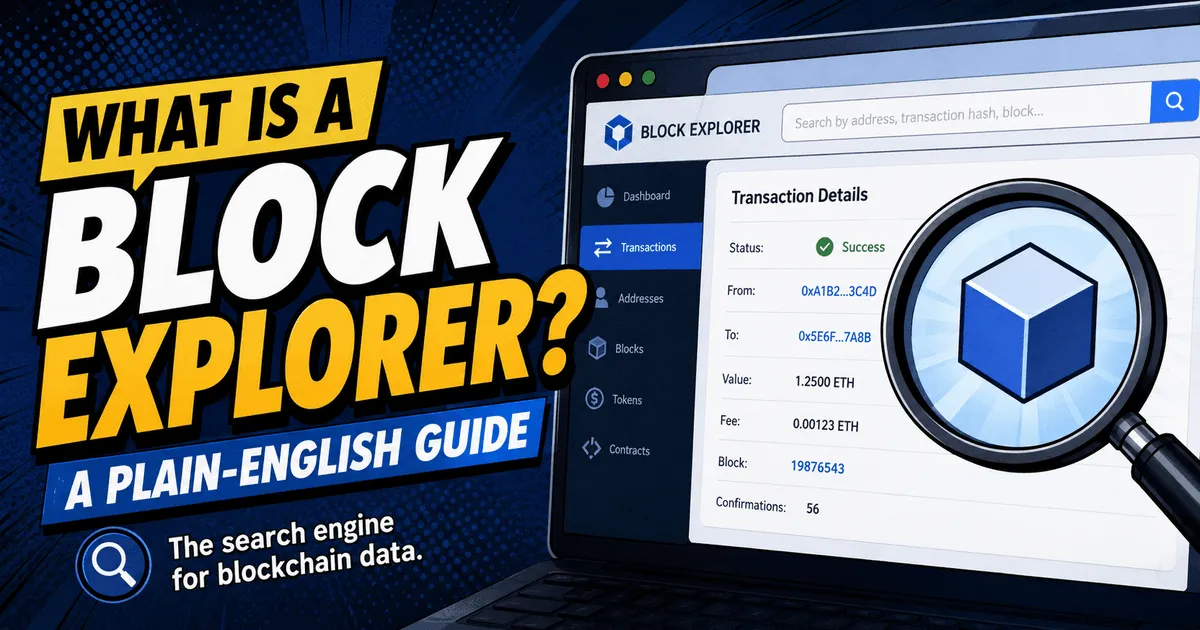
A block explorer is a search engine for a blockchain. It takes the raw, public data a network records — every transaction, address, block, and token — and makes it searchable and readable in a browser. If a blockchain is a public ledger, the explorer is the index that lets anyone look things up.
What can you look up on a block explorer?
- Transactions — by their transaction hash (a unique ID): sender, receiver, amount, fee, and status.
- Addresses — a wallet’s balance and full history of activity.
- Blocks — the batches of transactions the network confirms, each with a height (number) and timestamp.
- Tokens — supply, holders, and transfers for a specific asset.
- Smart contracts — the code deployed to an address, and how people interact with it.
How do you read a transaction?
Open the transaction by its hash. The three things worth checking first are the status (Success or Failed), the from and to addresses, and the value transferred. Below that you’ll usually find the network fee paid, the block it landed in, and the number of confirmations — the more confirmations, the more final it is.
Why a single number is never enough
Because the data is public and every entry points back to the block that confirms it, nothing on an explorer has to be taken on trust — you can trace any figure to its source. The catch is fragmentation: each network historically has its own explorer, so answering one question can mean opening five tabs.
A multi-chain explorer like Alltoscan Explorer brings EVM networks into one place, so you can follow activity across chains without switching between a different site for each.
Explore Alltoscan ExplorerFurther reading